
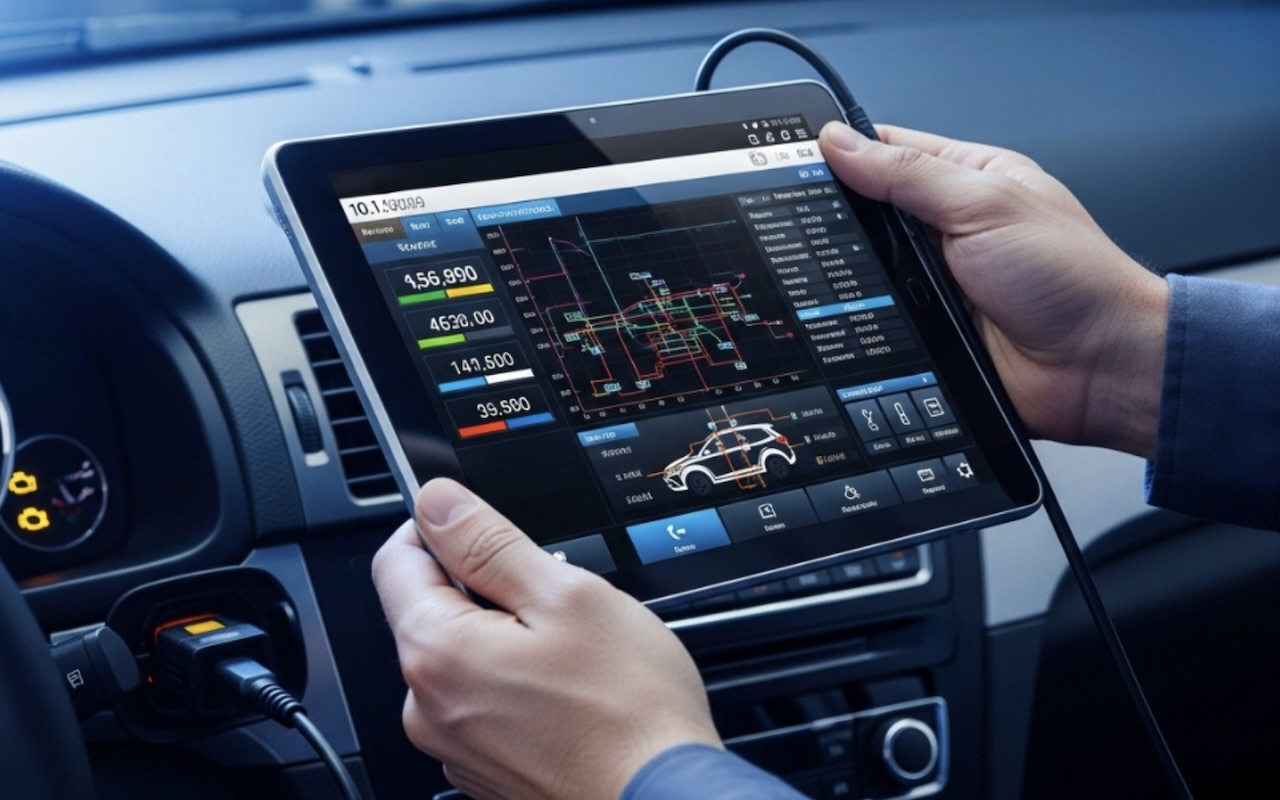
Every car owner has experienced that gut-punch moment: the check engine light (CEL) suddenly glows on the dashboard. Panic sets in; Is it a loose gas cap or a costly engine failure? While the CEL signals a problem, it tells you nothing about the details. That’s where a professional OBD2 scanner becomes indispensable. Unlike basic code readers that only spit out cryptic codes, these tools turn vague warnings into actionable insights, saving you from blind guesswork, unnecessary mechanic bills, and costly breakdowns.
What the Check Engine Light Really Means (And Why Basic Tools Fall Short)
Your car’s onboard computer (ECU) triggers the CEL when it detects a fault, from a faulty oxygen sensor or ignition misfire to emission system glitches. But the light itself is just a “heads-up,” not a diagnosis. Basic OBD2 code readers might identify a simple P-code (like P0420 for catalytic converter issues), but they stop there.
Limitations of Basic Code Readers
Many drivers rely on basic OBD2 code readers, which can certainly help identify a simple engine code. However, these devices have notable limitations:
- They often provide access only to the engine control unit (ECU), missing issues in systems like ABS, SRS, or transmission.
- Real-time data streaming is rarely available, which makes diagnosing intermittent problems difficult.
- Advanced functions such as adaptations, bi-directional control, or system resets are generally unsupported.
While a basic reader can tell you something is wrong, it often stops short of providing the full picture. This gap is exactly why a professional OBD2 scanner is worth the investment.
A truly professional car scanner tool bridges this divide, transforming vague alerts like “something’s wrong” into clear guidance on exactly what needs to be fixed.
The Non-Negotiable Advantages of a Professional OBD2 Scanner
Upgrading to a professional OBD2 scanner isn’t just a “nice-to-have”; it’s a tool that puts control of your vehicle’s health in your hands. Here’s what makes it essential:
- Full-System Coverage (No Blind Spots): Unlike basic readers, professional scanners access all vehicle systems: engine, transmission, ABS, airbags, and even emission controls. This means you won’t miss safety-critical issues like a failing airbag sensor or ABS malfunction, problems that could put you at risk on the road.
- Real-Time Data and Freeze-Frame for Precision: When a fault occurs, a professional scanner captures a “freeze-frame” of your car’s state (RPM, coolant temperature, fuel pressure) and streams real-time data. This is game-changing for intermittent issues, like a misfire that only happens when the engine is cold. You’ll see exactly when and why the problem occurs, instead of guessing.
- Advanced Functions That Save Money: Professional scanners handle tasks that would otherwise require a dealer visit: oil service resets, DPF regeneration, brake bleeding, and even bi-directional testing (actively controlling components like fuel injectors or cooling fans to verify functionality). These features alone can save hundreds in mechanic fees annually.
Example: Features of a Professional OBD2 Scanner
Professional-grade OBD2 scanners are designed to go beyond basic code readers by combining broad system coverage with advanced functionality. A well-equipped scanner typically offers:
- Full-system diagnostics, including engine, ABS, SRS, and transmission.
- Real-time data streaming and freeze-frame capture to help identify intermittent issues.
- Advanced maintenance functions such as oil resets, EPB service, and battery registration.
- Compatibility with a wide range of vehicle makes and models.
Real-World Scenarios Where It Makes a Difference
Consider a scenario where your CEL comes on due to a misfire in cylinder one. A basic reader might only show a generic P0301 code, leaving you uncertain about the severity. A professional OBD2 scanner provides live data, revealing exactly which cylinder is misfiring and under what conditions.
Similarly, warning lights for ABS or SRS may be invisible to simpler devices but are easily detected and diagnosed with a car scanner tool. For fleet managers or used car buyers, these professional scanners ensure that vehicles are operating safely and that hidden issues are uncovered before they escalate.
Who Needs a Professional OBD2 Scanner?
If you fall into any of these categories, it’s an investment that pays for itself:
- DIY Car Owners: Proactively maintain your vehicle and avoid unnecessary mechanic trips.
- Professional Mechanics/Shops: Deliver faster, more accurate diagnostics to clients.
- Fleet Managers: Keep multiple vehicles running smoothly and reduce downtime.
- Used Car Buyers/Inspectors: Uncover hidden issues before making a purchase.
Conclusion
The check engine light is only the beginning. To truly understand and maintain your vehicle, a professional OBD2 scanner offers full-system diagnostics that basic readers simply cannot match. From real-time data monitoring to bi-directional testing and advanced reset functions, investing in a reliable car scanner tool ensures faster, more accurate troubleshooting, saves money on repairs, and prolongs the life of your car.
Whether you’re a professional mechanic, a DIY enthusiast, or someone managing a fleet, upgrading to a professional scanner transforms how you interact with your vehicle—turning uncertainty into clarity and giving you peace of mind on every drive.
Share this post
Leave a comment
All comments are moderated. Spammy and bot submitted comments are deleted. Please submit the comments that are helpful to others, and we'll approve your comments. A comment that includes outbound link will only be approved if the content is relevant to the topic, and has some value to our readers.
Comments (0)
No comment