
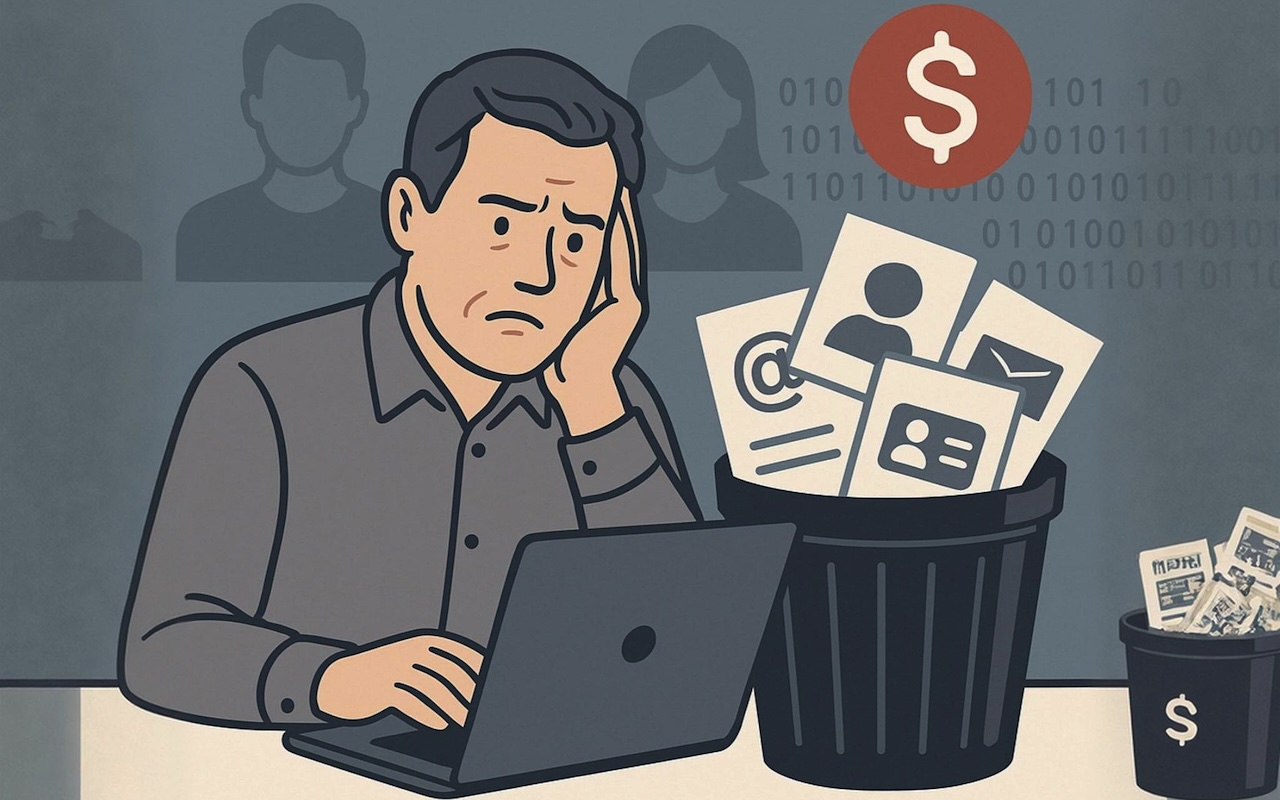
Why Ignoring Data Privacy Creates Long-Term Exposure
What happens when sensitive data lingers longer than it should? The risks aren't hypothetical. They’re operational, financial, reputational. Companies sitting on outdated information carry invisible liabilities that few decision-makers recognize — until they explode.
If organizations fail to purge their databases and/or eliminate irrelevant records, they run the risk of unauthorized access, loss of customer faith, and substantial government penalties. It used to be that platforms were developed to remove their customers data efficiently, and while this was once just a convenience to companies looking to reduce their legal exposure and reputational risk, removal companies are now imperative to any organization concerned about these risks.
Hidden Costs Beyond the Obvious
On the surface, retaining customer information appears safe. After all, the data may someday help with remarketing, analytics, or personalized experiences. But the associated costs can spiral quickly.
| Type | Description |
|---|---|
| Legal Fees | Lawsuits or noncompliance with privacy legislation |
| Operational Costs | Managing or storing too much data |
| Reputational Damage | The negative press or consumer pushback from a breach |
| Loss of Customer Loyalty | Customers are likely to go to another vendor that has better privacy |
| Hefty Fines | Penalties under GDPR, CCPA, or other regulatory frameworks |
Not deleting customer data leads to unnecessary financial losses that compound quietly over time.
Neglecting Data: A Costly Oversight
Let’s be honest. Most companies don’t set out to ignore data privacy. But once data is collected, there’s rarely urgency around deletion. This casual approach opens the door to outdated records, poor data governance, and increased risk.
Consequences of neglecting data include:
- Outdated information used in decision-making
- Increased exposure to unauthorized access
- Larger targets for cybercriminals
- Operational inefficiencies due to bloated databases
- Non-compliance with privacy regulations
When poor data management becomes a pattern, the financial impact is inevitable.
The Price of Neglecting Data Privacy
One breach is all it takes.
A single breach can cost millions. The global average cost of a data breach is $4.45 million. If sensitive collections, like PII, have been exposed, penalties related to regulations, like the CCPA of GDPR, will serve as additional costs.
Examples of fines from regulators:
- Meta (Facebook): $1.3 billion fine for GDPR violations
- British Airways: £20 million for failing to secure customer information
- Marriott International: $124 million fine for delayed breach disclosure
These aren’t just penalties. They reflect broken trust, damaged reputation, and failure in accountability. Failing to protect personal data can trigger audits, lawsuits, and severe operational setbacks.
Compliance and Best Practices Around Data Privacy
Organizations bound by the General Data Protection Regulation must honor deletion requests. That requires not only policies but also effective systems that manage data across platforms with precision.
Checklist to comply with privacy and security standards:
- Maintain detailed audit trails
- Establish access controls
- Use robust data protection protocols
- Regularly review your privacy policy
- Follow best practices for data retention and deletion
- Comply with industry standards
- Schedule data audits
- Educate staff on data governance practices
Strong compliance frameworks not only prevent fines but also create a competitive advantage by showing customers that their information is safe.
 FAQ: Uncommon Questions About Data Deletion Risks
Yes. The storage of irrelevant or old data will slow systems down, take up space, and create a complication of processes.
Anonymization can serve a purpose, but it is not synonymous with actually deleting the data. In many cases, a person can re-identify anonymized data by making appropriate references.
Human error remains one of the greatest contributors to data breaches. An untrained employee may not act maliciously, but may mishandle or disclose an exposure nevertheless.
Strong cybersecurity is an important factor, but only one factor. Blocking unauthorized access to information plays a role in protecting it, but having a deletion policy also contributes greatly.
Yes. Backups can preserve sensitive data forever. Without a deletion policy in place, old customer records exist with every restore point into the past since the source time continued to be backed up.
Conclusion
Ignoring data privacy isn’t just a technical oversight but it’s a long-term business liability. Outdated, unused, or poorly protected information increases the risk of breaches, regulatory fines, and loss of customer trust. In today’s compliance-driven landscape, responsible data deletion is no longer optional. It’s a fundamental aspect of modern governance. By maintaining strong privacy practices, enforcing deletion policies, and investing in secure data management tools, organizations can protect their reputation, ensure regulatory compliance, and build lasting confidence with customers.
Share this post
Author

Read the latest articles from Ann Colins

February 27, 2024
From Clicks to Cars: Understanding Cyber Risks in the Digital Automotive Marketplace
The automotive sector has experienced a significant transition in the connected digital landscape of today. Consumers now have unparalleled access to a wide choice of vehicles at the touch of a button, thanks to the growth of online platforms and digital marketplaces. But this ease also brings with it a new set o [...]
Learn moreLeave a comment
All comments are moderated. Spammy and bot submitted comments are deleted. Please submit the comments that are helpful to others, and we'll approve your comments. A comment that includes outbound link will only be approved if the content is relevant to the topic, and has some value to our readers.
Comments (0)
No comment