

DNS and Naming
Domain Names
Choose, register, and protect the name people use to find you
A domain name is the memorable address people type instead of an IP address. It connects brand, navigation, DNS, email, search visibility, and visitor trust.
Domain Names
Domain Names
Some of you may want to build a blog, others may create a personal website, and some business owners may want to create an online store (ecommerce website). Regardless of type of website you're planning to create, registering a domain name is an essential first step in making a website.
What is a domain name?
A domain name is an "unique", human readable Internet Address which is mapped to machine readable IP Address. A domain name is used to setup a website, and is also used to create email addresses. It is desirable to register a memorable, short and keyword-rich domain name.
Cost of registering a domain name is anywhere from $10-$15 per year.
Owning a domain name involves registering the name with the ICANN, a non-profit organization that is responsible for maintaining domain name database. You cannot register a domain name directly from ICANN, but you may register one from an ICANN accredited domain name registrar or it's reseller. You may register a domain name for up to 10 years, and the name has to be renewed before expiration otherwise you'll lose the domain name.
Domain Name Syntax
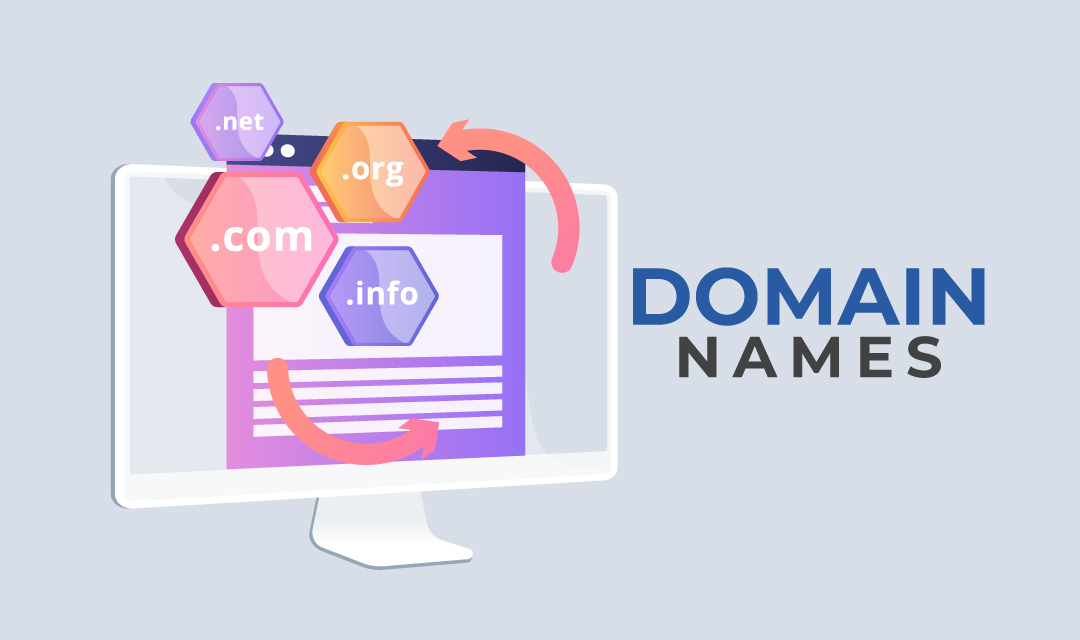
Domain name is comprised of at least two parts: top level domain (TLD) and second level domain (SLD). TLD includes generic TLD (or gTLD) such as .COM, .NET, .ORG, .INFO, and .BIZ; or country code TLD (or ccTLD) which is designed for each country such as .us (USA), .ca (Canada) or .fr (France). Each TLD is designed for a specific purpose, so choose the one that is right for you. If you're looking to build a business website, the .COM domain name is the right choice; and for non-profit organization, family or hobby website, the .ORG domain name will work.
The domain name that you can register from a registrar is the second level domain (SLD) name for a particular TLD. The domain names starts from right to left separated by a dot, so TLD is the rightmost name, SLD is the one before that. The third and lower domain names are known as subdomain names, and they can be arbitrarily created by the SLD domain name owner. A good example of subdomain is the www, which is generally used for a website such as www.setup-website.com. As a owner of setup-website.com domain name, we created a subdomain name called www to serve our website.
What are the valid characters and how long can it be?
- Only alphanumeric (A through Z, 0 through 9) and dash (-) characters are allowed. No symbols including @ are allowed.
- Domain name cannot begin with a dash.
- Domain name can be 1 to 63 characters long excluding TLD (.com, .net or .org), but you may only register names that are only 3 - 63 characters long. A single letter (or digit) domain names for .COM, .NET and .ORG are reserved by IANA, and cannot be registered. The 2 char domain names are only available through secondary market.
- Domain name is case insensitive, but usually written in all lower-case.
You may obtain a 3rd-level (sub) domain name from a free blog provider such as wordpress.com or blogger.com, but I strongly suggest that you get your own domain name. It takes time and effort to advertise your website to the world, so building your website on your own domain name will create a significant intrinsic value to your web property.
Disclaimer: We receive compensation when a purchase is made from the referred link. Our recommendation is based on our research and positive feedback we received from the users who've used the services.
Supplemental Guide
Useful context before your next decision
Domain Names
How a Domain Name Is Structured
A domain normally includes a second-level name and a top-level domain. In iplocation.net, “iplocation” is the second-level name and “.net” is the TLD.
Subdomains such as www, blog, mail, or tools can point to different services while staying under the same parent domain.
Domain Names
DNS Records You Will See Often
A and AAAA
Point a domain or subdomain to IPv4 and IPv6 addresses.
CNAME
Creates an alias from one hostname to another service hostname.
MX
Routes email for the domain to the correct mail servers.
TXT
Stores verification, SPF, DKIM, DMARC, and other text-based records.
Domain Names
Choosing a Domain
Prefer short names that are easy to say, spell, and remember. Avoid confusing hyphenation, trademark risk, awkward plurals, and names that only make sense to insiders.
For businesses, the domain should survive product changes. A durable brand name is often stronger than a narrow keyword phrase.