

Computing, Cloud Services, Information Technology
Best VMware Alternatives for Enterprise Virtualization in 2026

A few years back, VMware was the default answer whenever someone asked about enterprise virtualization. IT teams trusted it; it had the ecosystem, and it worked. But things shifted pretty fast after Broadcom completed its acquisition.
Licensing costs went up, structures became more complex, and many IT leaders started asking a question they hadn't seriously asked before: Do we actually need VMware?
VMware still holds a significant chunk of the virtualization market, but rising costs and licensing headaches are pushing more enterprises to look elsewhere genuinely. And not just look, but act.
This guide breaks down the top VMware alternatives, compares costs, and looks at real deployment outcomes so you can make a well-informed call before your next renewal lands on your desk.
Why Enterprises Are Switching from VMware in 2026
The complaints aren't new, but they've gotten louder. Here's what's actually driving organizations to look at other options:
| Pain Point | Impact on Enterprise |
|---|---|
| Complex VMware licensing | Unexpected costs, confusion between editions |
| High TCO post-Broadcom | Reports of 30-50% cost increases |
| Bundled product dependency | Reduced flexibility, forced purchase of unused components |
| Operational complexity | Higher learning curve, slower troubleshooting |
Gartner research has flagged growing enterprise concern about VMware licensing costs as a key driver pushing organizations to evaluate alternatives. And honestly, that tracks.
If you’re an IT manager who suddenly got handed a renewal quote that’s significantly higher than last year, with no real added value on the table, you start looking around, fast. But before you start scouting for the most suitable VMware alternative, know what to consider when selecting one.
How to Evaluate VMware Alternatives
Before selecting a VMware replacement, enterprises should assess:
- Licensing model and long-term TCO
- Migration complexity
- Operational continuity
- Scalability
- Ecosystem compatibility
- Automation capabilities
- Hybrid cloud readiness
- AI infrastructure readiness
- Enterprise support quality
- Smooth workload migration
These criteria help enterprises move beyond simple price comparisons so that they can focus on long-term infrastructure strategy.
5 Best VMware Alternatives for Enterprise Virtualization (Ranked)
Several enterprise virtualization platforms are commonly evaluated as VMware competitors in 2026. Among the most frequently considered are Sangfor HCI, Microsoft Hyper-V, Nutanix AHV, Proxmox VE, and Red Hat Virtualization. Each platform offers different strengths depending on an organization's infrastructure, cloud strategy, budget, and operational requirements.
1. Sangfor HCI — The Top VMware Alternative
Sangfor HCI is a hyperconverged infrastructure platform designed for organizations evaluating alternatives to VMware. It supports virtualization, private cloud, hybrid cloud, and AI-enabled infrastructure.
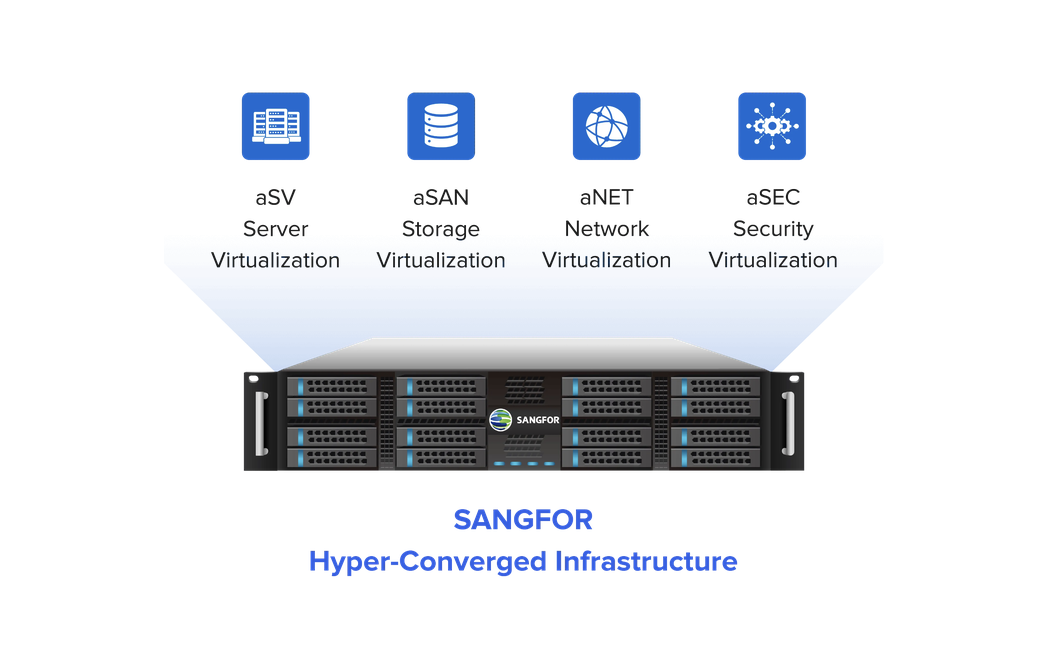
Built on top of Sangfor's Type-1 (bare-metal) aSV hypervisor, Sangfor HCI supports virtualization, private cloud, hybrid cloud, and AI-enabled infrastructure. Sangfor ASV is often evaluated as a VMware vSphere alternative for organizations looking to migrate from VMware while maintaining familiar virtualization capabilities.
Sangfor states that its interface and workflow are designed to be familiar for VMware administrators, with migration tools intended to help reduce deployment complexity. According to Sangfor, organizations may achieve up to 70% lower total cost of ownership compared with VMware, depending on deployment requirements and infrastructure configuration.
Migration complexity is often an important consideration when evaluating VMware alternatives, as organizations seek to minimize downtime and operational disruption.
Sangfor was identified as a Representative Vendor in the 2025 Gartner Market Guide for Server Virtualization Platforms.
According to Gartner Peer Insights, Sangfor HCI has an average rating of 4.8 out of 5 based on 175 reviews.

Sangfor states that its aSV hypervisor supports a 1:1 resource allocation ratio, which may be a consideration during capacity planning.
2. Microsoft Hyper-V — Strong Enterprise Integration
If your organization is already deep in the Microsoft ecosystem, Hyper-V is a natural place to look. It’s a Type 1 hypervisor with native Azure integration, and its licensing model is noticeably simpler than VMware’s layered-edition structure.
This is an ideal choice for organizations that operate in a Windows server-heavy environment. The performance is reliable, management tools seem familiar to VMware and are accessible through Windows Admin Center.
Plus, Hyper-V provides a clear path to Azure workloads that doesn’t require third-party connectors. If your roadmap is Microsoft-first, Native Azure integration may appeal to organizations that already rely on the Microsoft ecosystem.
The downside is real, though. Non-Windows OS support is limited, so if you’re running a mixed environment with a meaningful share of Linux workloads, Hyper-V may introduce friction rather than remove it. Know your workload mix before you commit.
3. Nutanix AHV — HCI-First Approach
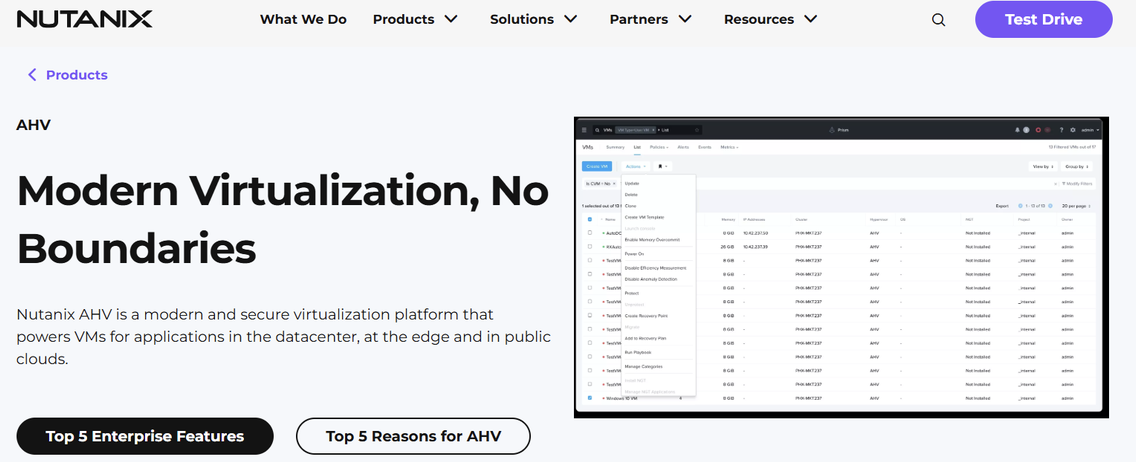
Another one of the VMware alternatives, Nutanix, combines storage, compute, and virtualization into a single hyperconverged infrastructure stack in the same fashion as the major competitors out there. This is often evaluated by organizations building cloud-native and AI-oriented infrastructure.
You can add or reduce nodes to scale up or down (as necessary). However, the catch is the upfront cost. Initial deployment is more expensive than several alternatives, and you should be clear-eyed about vendor lock-in within the Nutanix stack. It’s a mature platform that works well, but it’s worth factoring those trade-offs into your evaluation.
4. Proxmox VE — Best Open-Source Option
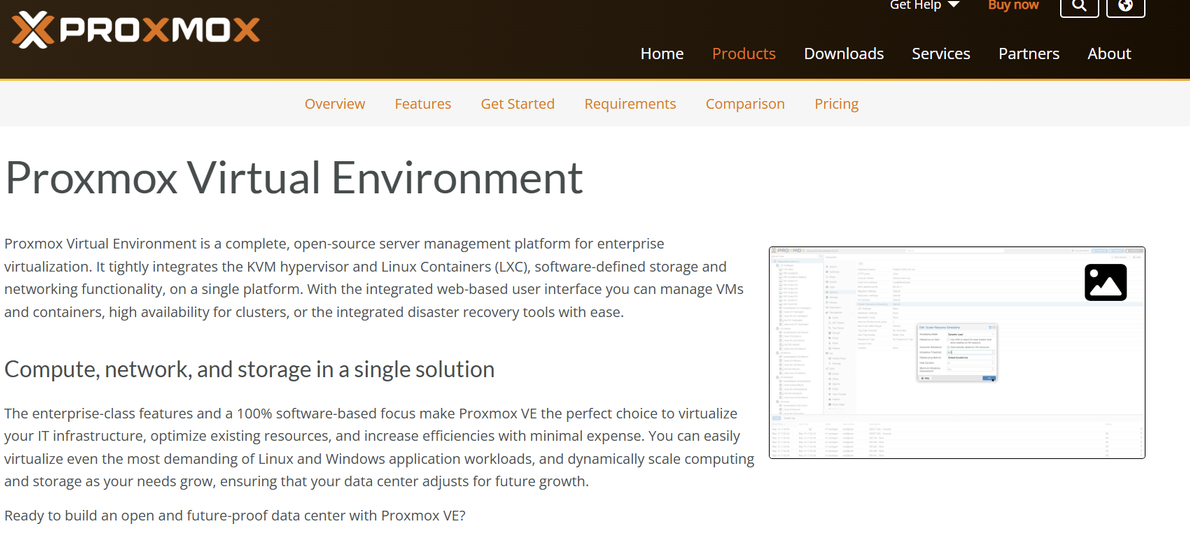
Teams with a budget as a genuine constraint driving their decision can consider Proxmox VE. However, it comes with a steep learning curve. So teams with strong technical depth can turn it to their advantage. Plus, it comes with enterprise-grade features such as high-availability clustering and live migration.
Although the licensing cost is zero, Proxmox VE poses serious downsides when seen from the perspective of customer support. Unless you’re paying for a commercial subscription, you’ll have to primarily rely on community forums when something breaks.
5. Red Hat Virtualization — Linux-Centric Platform

With a KVM hypervisor baked into the Linux kernel, Red Hat Virtualization integrates cleanly with Ansible. Therefore, automated VM provisioning and lifecycle management is hardly a question.
However, on the upside, TCO is significantly lower compared to VMware. In addition, the open-source foundation gives you real flexibility on how you build and operate your environment.
The honest caveat: this platform is probably overkill for small to mid-sized shops. It is generally best suited to large organizations with Linux expertise already in place. If that’s your environment, it’s a strong fit.
How Does VMware Licensing Cost Compare to Alternatives in 2026?
VMware licensing costs increased following Broadcom's acquisition, and many organizations have reported higher subscription costs and a more complex licensing structure. As a result, enterprises are increasingly evaluating alternative virtualization platforms based on factors such as total cost of ownership, licensing simplicity, migration effort, and long-term infrastructure strategy.
When comparing platforms, organizations should review vendor pricing models, infrastructure requirements, support offerings, and independent analyst evaluations to determine which solution best fits their operational and budgetary needs.
Why AI Readiness Matters When Choosing a VMware Alternative
Many organizations evaluating VMware alternatives are no longer focused only on virtualization costs. Infrastructure decisions made today will directly influence future AI initiatives, including:
- Private AI deployments
- GPU-enabled workloads
- AI-assisted operations
- Data-intensive analytics
- Cloud-native applications
Organizations should therefore evaluate whether a virtualization platform can evolve into an AI-ready cloud infrastructure foundation rather than simply replacing VMware functionality. Many modern enterprise virtualization platforms now support private cloud, hybrid cloud, and AI-ready infrastructure, enabling organizations to scale their environments as business requirements evolve.
Conclusion
VMware remains a widely used enterprise virtualization platform, but changes to its licensing model and rising costs have prompted many organizations to reassess their options. As enterprises plan future infrastructure investments, evaluating virtualization platforms based on licensing, migration complexity, scalability, cloud integration, and long-term operational requirements has become increasingly important.
Platforms such as Sangfor HCI, Microsoft Hyper-V, Nutanix AHV, Proxmox VE, and Red Hat Virtualization each offer different capabilities and trade-offs. Comparing these solutions against your organization's technical requirements, existing ecosystem, and budget can help identify the virtualization platform that best supports both current workloads and future growth.
FAQ
FAQs
01What is the best VMware alternative in 2026?
The most suitable VMware alternative depends on an organization's infrastructure, licensing preferences, cloud strategy, budget, and operational requirements. Commonly evaluated platforms include Sangfor HCI, Microsoft Hyper-V, Nutanix AHV, Proxmox VE, and Red Hat Virtualization.
03Why are organizations moving away from VMware?
Many organizations are reassessing VMware due to licensing changes, rising subscription costs, modernization initiatives, and AI readiness requirements.
04What should enterprises consider before migrating from VMware?
Organizations should evaluate migration complexity, operational continuity, licensing costs, ecosystem compatibility, scalability, and future cloud strategy.
05Which VMware alternative is best for hybrid cloud?
The answer depends on organizational requirements, but platforms that support private cloud, hybrid cloud, and infrastructure modernization are often considered during evaluations.
06Can VMware alternatives support AI workloads?
Modern VMware alternative providers increasingly support AI-ready infrastructure requirements, including GPU-enabled workloads, cloud-native applications, and private AI deployments.
Comments
Comments are moderated to keep the discussion useful and respectful. Spam, automated submissions, and low-value promotional comments are removed. Comments with outbound links may be approved when the link is relevant to the article and genuinely helpful to readers.
No comments have been published yet.