

Artificial Intelligence, Technology, Security
Combining AI design power with ID card printing experience
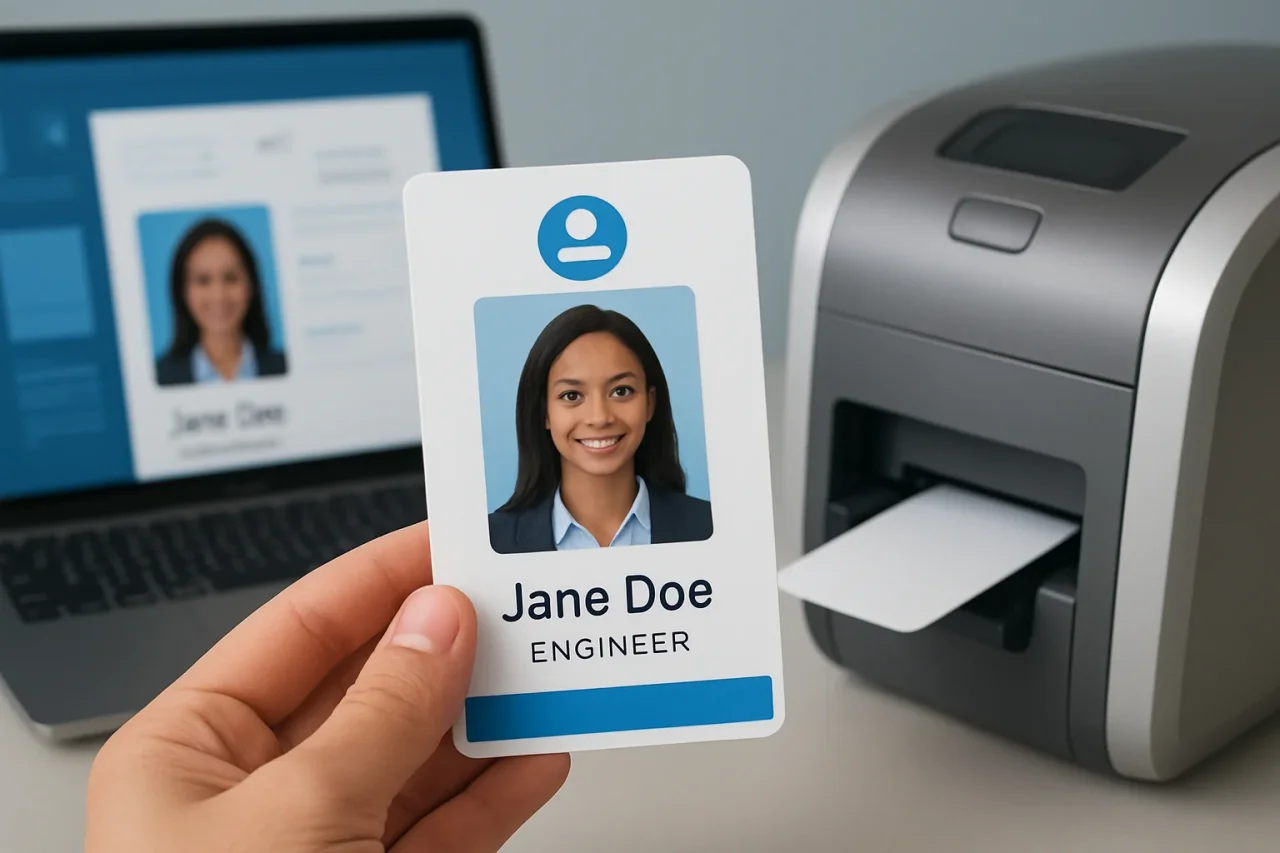
Artificial intelligence has dramatically changed the way businesses approach graphic design. Just a few years ago, creating a professional ID badge required graphic design software, experienced designers, and multiple rounds of revisions. Today, AI can generate polished layouts, suggest color combinations, remove image backgrounds, improve portraits, and even create complete badge concepts within seconds.
While these advancements have made professional design accessible to everyone, the best results come from combining AI's creative capabilities with decades of real-world printing experience. Digital designs that look perfect on a computer screen do not always translate into high-quality printed PVC cards. Understanding the limitations and strengths of commercial card printing is where years of industry expertise continue to make a significant difference.
Organizations looking for professional ID badges benefit from a workflow that blends AI-generated creativity with practical knowledge gained from producing thousands of printed cards across countless industries.
The Evolution of AI Image Design
The first generation of AI image tools focused primarily on generating artwork from text prompts. While impressive, these systems often produced inconsistent layouts, unreadable text, distorted logos, and unrealistic human faces.
Modern AI has evolved significantly. Today's design systems understand composition, branding, typography, spacing, and visual hierarchy far better than earlier models. They can recommend color palettes that complement a company's branding, generate modern layouts, enhance employee photos, and automatically remove distracting backgrounds.
AI also learns from millions of professionally designed graphics, allowing it to recommend layouts that follow established design principles while dramatically reducing the amount of manual work required.
For businesses ordering employee ID cards, visitor badges, membership cards, or access credentials, this means faster design creation and fewer revisions before production.
Experience Teaches AI What Actually Prints Well
Despite rapid advances, AI has one important limitation—it designs for digital perfection rather than physical production.
A badge viewed on a high-resolution monitor behaves very differently once printed on PVC using professional dye-sublimation or retransfer printing technologies.
Over more than 20 years of commercial card printing, experienced professionals have learned countless details that AI alone cannot reliably predict, including:
- Minimum font sizes that remain readable.
- Safe margins that prevent important information from being trimmed.
- Barcode placement for reliable scanning.
- QR code sizing for fast mobile recognition.
- Color adjustments that compensate for PVC material characteristics.
- Contrast optimization for employee photographs.
- Background choices that maintain readability under different lighting conditions.
These printing considerations often determine whether a card simply looks attractive or performs reliably every day.
AI Can Learn From Decades of Production Knowledge
The most exciting development isn't AI replacing human expertise; it's AI being guided by it.
Modern badge design platforms increasingly incorporate years of production experience into their AI recommendations. Instead of simply creating attractive graphics, AI can recommend layouts that are known to print successfully.
For example, an AI system trained using years of production feedback may automatically:
- Position photos where facial recognition is strongest.
- Keep important text away from punch slots.
- Increase white space around QR codes.
- Improve color balance for PVC printing.
- Recommend stronger contrast for employee names.
- Choose layouts that remain readable after lamination.
This combination significantly reduces design errors while improving final print quality.
Faster Design Without Sacrificing Quality
Traditional badge creation often involved multiple email exchanges between customers and designers.
Today, AI accelerates much of that workflow by generating professional starting points within seconds. Users can upload a company logo, specify brand colors, and receive multiple design suggestions almost instantly.
Rather than replacing human creativity, AI acts as a highly capable design assistant that dramatically reduces repetitive work.
The result is:
- Faster onboarding for new employees.
- More consistent branding.
- Shorter approval cycles.
- Fewer design revisions.
- Higher-quality finished cards.
Organizations that regularly issue employee badges particularly benefit from these efficiencies.
AI Makes Professional Design Available to Everyone
Small businesses often cannot justify hiring professional graphic designers for employee identification cards.
AI changes that equation by making sophisticated design assistance available regardless of organization size.
Even users with no design experience can now create polished layouts featuring:
- Balanced typography
- Professional spacing
- Modern color palettes
- Clean photo placement
- Consistent branding
- High visual impact
The process becomes even more valuable when AI recommendations are refined using decades of card production expertise.
The Future Is Hybrid Intelligence
The future of ID badge design will not be entirely AI-driven or entirely human-driven.
Instead, the strongest solutions combine both.
Artificial intelligence excels at rapidly exploring creative possibilities, generating multiple layouts, and automating repetitive design tasks. Human expertise contributes practical knowledge developed through years of commercial printing, ensuring every design performs as well in physical form as it does on a screen.
This hybrid approach allows organizations to produce better-looking cards faster while avoiding common production mistakes that inexperienced designers, or AI acting alone, may overlook.
Businesses interested in exploring this next generation of intelligent badge creation can discover how AI designed ID cards combine modern artificial intelligence with decades of professional printing expertise. The result is a faster, smarter design process that produces cards optimized not only for appearance but also for durability, readability, and reliable everyday use.
As AI continues to evolve, its greatest value will not come from replacing experience but from learning from it. By combining cutting-edge image generation with more than two decades of printing knowledge, organizations can achieve designs that are visually appealing, production-ready, and built to perform in real-world environments. That balance between innovation and proven expertise represents the future of professional ID badge design.
Comments
Comments are moderated to keep the discussion useful and respectful. Spam, automated submissions, and low-value promotional comments are removed. Comments with outbound links may be approved when the link is relevant to the article and genuinely helpful to readers.
No comments have been published yet.