

Education, Technology, Security
Future of Examination Technology: Trends Shaping Digital Assessments
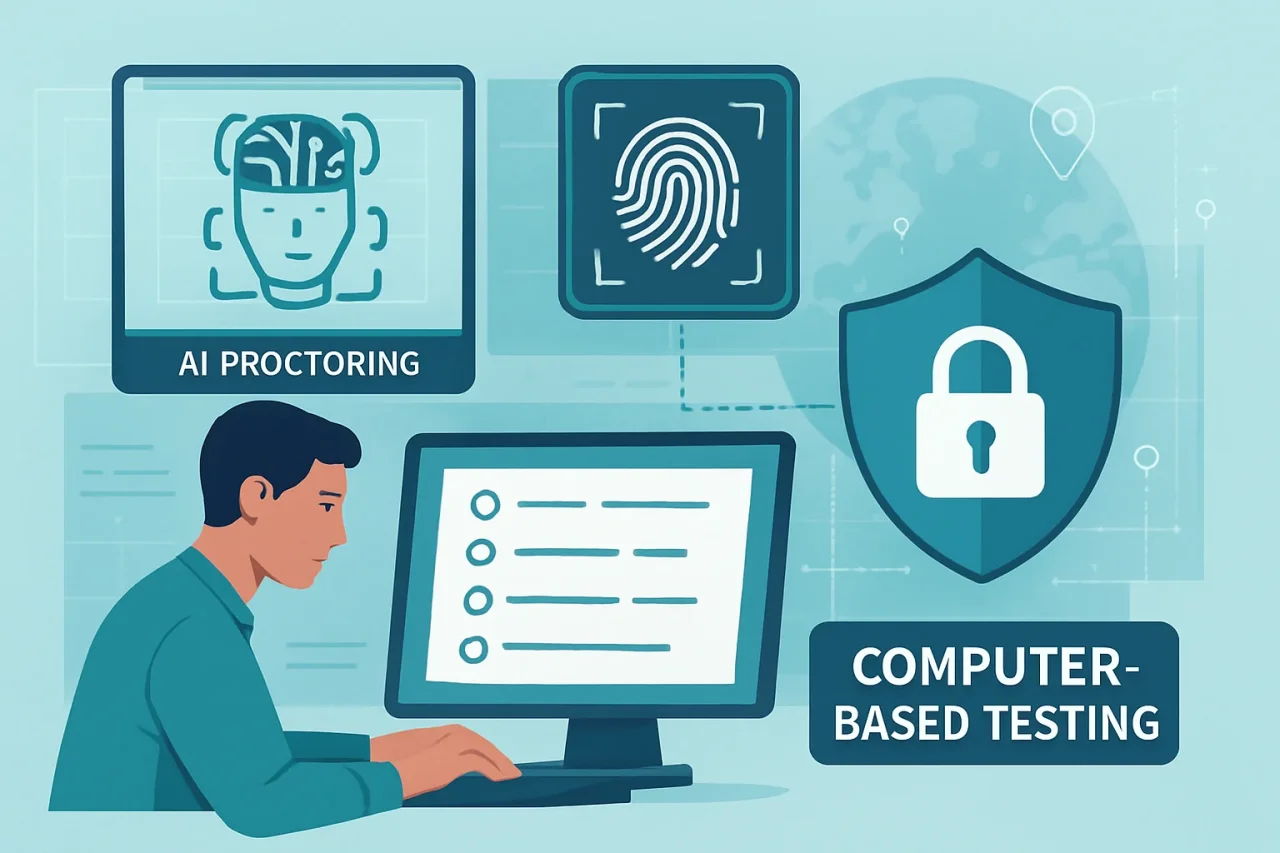
More changes have been experienced in examinations over the last couple of years compared to what was witnessed over the last few decades. Manual testing in physical examination rooms, using paper-based tests and manual invigilators, is gradually being replaced by automated, computerized tests that incorporate biometric monitoring. At the heart of this revolution are new examination systems designed to make testing easier, more efficient, and less manipulative.
This is not only an issue of convenience. There has been increased demand for institutions to conduct large-scale examinations and avoid malpractice within a reasonable time and cost. Such platforms meet these demands, which is why much funding and innovation have been directed to the sector in the last couple of years. This article will explore the future trends of testing.
Why Examination Technology Is Evolving So Fast
Educational and certification organizations conduct millions of tests annually, ranging from simple school-level examinations to professional licensing exams. The manual process has been difficult to cope with such volumes of testing, especially when exams are conducted across several cities and countries. Paper leaks, impersonations, and unfair marking practices have forced educational institutes to seek a reliable examination platform with less human intervention at every stage.
On the other hand, examinees have become more flexible with respect to test-taking. Working and studying remotely has set the tone for taking examinations from the comfort of their home using personal computers. Therefore, there has been growing demand for online examination platforms that provide similar levels of security and fairness as physical examination halls without requiring candidates to be present in person. Educational institutions considering online examination systems need to assess how effectively remote proctoring works under practical network conditions compared to controlled platform demonstrations.
AI Proctoring and Remote Monitoring
One of the more observable changes in test-taking procedures is AI proctoring, an example of advanced AI-based examination platforms. In addition to traditional human invigilation, current platforms use computer vision technology to monitor eye movements, detect suspicious behavior, and identify unauthorized objects within the camera's field of view during examinations. Features such as remote proctoring enable examination platforms to scale securely to thousands of candidates simultaneously, a capability that would have been difficult to achieve without automation.
Generally, AI proctoring systems utilize video feed and automatic flagging, so that human invigilators need to review the sessions only in cases when the system flags the session as unusual. This helps to significantly reduce the load on invigilation staff while allowing most cheating attempts to be detected. Remote proctoring systems also improve their low-bandwidth support, so that online examination platforms become available in areas with poor internet access. With improvements in machine learning algorithms, such platforms are becoming better at differentiating cheating attempts from normal situations.
Biometric Authentication and Candidate Verification
Impersonation has always been one of the most challenging issues in mass testing processes. Candidate authentication via the use of their face, fingerprints, or eyes has become an integral part of modern exam platforms, filling the void left by photo identification.
This type of authentication takes place on various stages, not only upon logging into the system. A test-taker will be authenticated once they begin their test and then re-authenticated several times during the process to ensure it is indeed the same person sitting in front of the computer. In combination with device and location authentication, secure examination systems become much more difficult to hack compared to traditional ones.
The Shift Toward Computer-Based Testing
Computer-based testing has transitioned from an alternative method to a standard in many certifying bodies and universities. Computer-based testing offers flexibility in the form of randomization of the question bank, immediate assessment of objective questions, and analysis of candidate performance, which is not possible through paper-based assessments.
The transition to computer-based testing also allows for more creative ways to test candidates. Adaptive testing, which involves changing the question difficulty level based on the candidate's responses, is much easier to execute through computers than through the paper approach. As more institutions adopt computer-based testing, advances in examination technology are supporting more flexible ways to administer and manage assessments.
GPS Monitoring and Physical Security Layers
Technology has not substituted physical security but has complemented it. The use of GPS tracking in monitoring exam centers along with CCTV and monitoring dashboards has allowed administrators to monitor numerous centers from one control room. It has helped significantly those exam centers which are held in hundreds of centers on the same day.
The security of question papers has been made even more secure using this technology. The encryption of digital delivery of the question papers and the use of GPS tracking for transporting physical copies wherever the digital delivery cannot be done have prevented the leaks that had occurred in the past in big examinations.
AI and Automation in Exam Management
AI goes beyond monitoring when it comes to managing examinations. Automation can allocate candidates to examination centers and time slots without manual intervention. AI-based examination platforms can also flag unusual result patterns, such as unexpectedly high scores from a particular testing center, before results are released. As AI technologies become more widely integrated into digital assessment platforms, continuous monitoring and automated analysis are becoming standard features rather than occasional audit tools.
With analytics dashboards, institutions can now get a clearer understanding of trends in the performance of their examinations, improve the difficulty of questions, and manage problematic centers based on this information.
Data Security and Privacy in Digital Assessments
With exams shifting to online environments, the data generated from such exams- biometric data, video data, and candidate responses becomes data that needs protection. Data security in examinations today involves encryption in transit and at rest, access control for staff members, and proper retention guidelines for biometric data once it is no longer required.
Data protection guidelines are tightening in a few areas, meaning that examination providers must ensure that their processes are compliant in advance. Institutions interested in acquiring a new platform must know how the candidate data will be stored, who will have access to it, and how long it will be stored after the exam cycle has ended.
What This Means for Institutions Choosing a Platform
There are many examination platforms available, so organizations should first identify their operational requirements before selecting one. A small organization administering a few thousand examinations each year may have different security and management needs than a national organization coordinating hundreds of examination centers. Enterprise examination management systems often include features for logistics, examination center administration, results management, and integrated exam security that support large-scale assessment operations.
Another aspect worth checking is how the platform deals with possible failures. For example, power cuts, poor connectivity at remote centers, and last-minute changes in candidate schedules can be problematic if there are no emergency solutions in place.
Conclusion
Future examination technologies will combine AI, biometrics, and enhanced security in both physical and digital environments, as opposed to operating in separate silos. Organizations that implement modern examination platforms will be better positioned to handle mass examinations with reduced malpractice, shorter turnaround times, and lower costs of doing business. Reliable candidate authentication has now become a minimum requirement. As more changes are expected in both candidate requirements and compliance, it is the organization’s investment in flexible and secure testing systems that will be well-equipped for any future developments.
FAQ
FAQs
01What are examination systems and why are they needed in organizations?
Examination systems are platforms that support candidate registration, identity verification, exam administration, monitoring, and grading. Modern examination platforms often combine management, security, and automation features to help organizations conduct large-scale assessments while reducing the risk of cheating, administrative errors, and delays in publishing results.
02How does the process of online exam monitoring with the help of AI proctoring work?
Computer vision and audio technologies are used to monitor the behavior of the candidate during the test, which includes tracking of unusual actions (objects, looking aside). Sessions which were flagged by AI are then examined by human invigilators before any measures are taken.
03Is it safe to use biometric authentication in large-scale exams?
Yes, when used along with verification of candidate identity multiple times during the exam session instead of using it only at the very beginning. Facial and fingerprint identification and re-verification make impersonation harder compared to simple photo identification.
04What is the difference between computer-based testing and traditional online exams?
Computer-based testing usually involves tests that are conducted in a test center or lab, while online exams are done remotely from candidates' devices.
05How is the security of candidates’ data ensured in digital examination systems?
Examination platforms typically use encryption while it is being sent and stored, limiting access to the data to their employees only where necessary. Institutions should verify these security measures before implementing a platform.
Comments
Comments are moderated to keep the discussion useful and respectful. Spam, automated submissions, and low-value promotional comments are removed. Comments with outbound links may be approved when the link is relevant to the article and genuinely helpful to readers.
No comments have been published yet.