

Games, Online Tools, Mobile App Development
How to Scan Pokémon Cards and Check Their Value With Your Phone
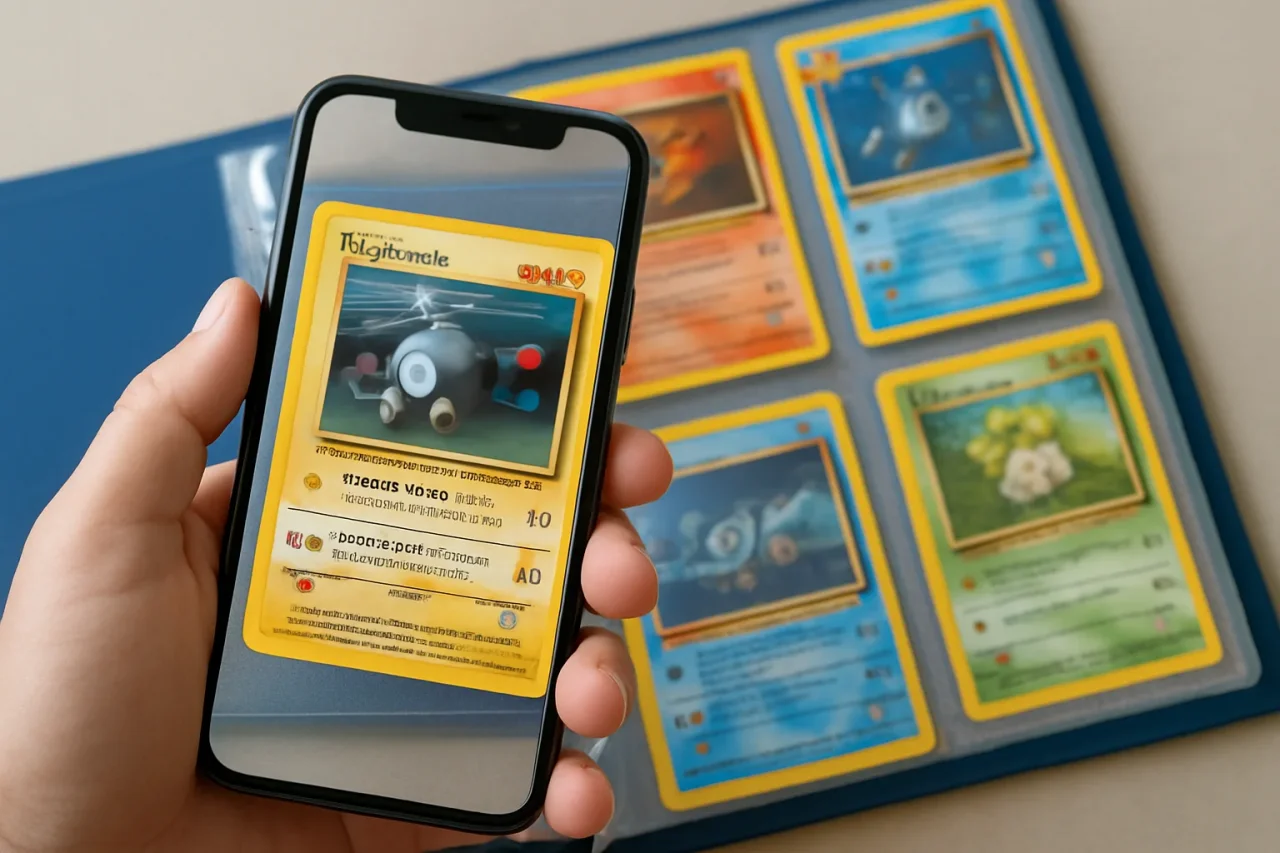
Finding an old Pokémon binder is exciting until you try to work out what every card is worth. One artwork may appear in several sets, languages, foil treatments, and reprints. Search the wrong version and a common card can suddenly look like a major find.
A phone scanner speeds up the first part. You photograph the card, confirm the exact print, and check available market data. The scan is a starting point, not a final appraisal. Condition, variant, demand, and recent sales still affect what somebody may pay.
Quick answer: You can scan a Pokémon card with your phone by using a card scanner that reads the artwork, name, collector number, and other visible details. Once the print is identified, the scanner can show raw prices, graded values, recent market activity, and collection tools. Always confirm the set, variant, language, and condition before relying on the displayed value.
What a Pokémon Card Scanner Actually Does
A Pokémon card scanner first tries to identify the card. The software compares the photo with a database, then returns a likely name, set, collector number, rarity, language, and print variation.
Identification comes first. Pricing comes second.
Once the match is confirmed, the scanner can show raw-market references and graded values. Better tools also let you save the result, record condition, follow price changes, or add the card to a collection total.
Definition: A Pokémon card scanner is a mobile tool that identifies a physical card from a photograph and matches it with a card database. After the collector confirms the print, the scanner can display market-price references, graded values, set details, and collection-management options.
How to Scan a Pokémon Card and Find the Correct Print
Lay the card flat under even light and keep all four corners inside the frame. Holofoil glare is the usual problem. I have watched a clean scan fail because a ceiling light covered the collector number. Moving the card a few inches fixed it.
Photograph the full card
Use a plain background and hold the phone directly above the card. Sleeves are usually fine, but scratched plastic and top loaders create reflections. Remove them when it is safe.
Check the set and collector number
Artwork alone is not enough. Compare the set symbol, collector number, language, and edition mark. Similar-looking cards can belong to different releases and have very different prices.
Confirm the variant
Look for standard, holo, reverse holo, full-art, alternate-art, stamped, or promotional versions. Don't accept the first match only because the picture looks right.
Some tools, such as a card value scanner for Pokémon from CardValueScanner.io, use photo recognition to help identify Pokémon cards, verify sets and variants, estimate raw and graded value ranges, and organize collections. These tools can be useful when sorting older collections, preparing cards for sale, or researching individual cards.
How to Check Live Prices and Track More Than One TCG
After confirming the print, read the price carefully. A useful scanner should separate raw value from graded value and provide enough context to spot a number that doesn't make sense. Short-term averages and price history can help separate a real trend from one unusual sale.
Batch scanning matters when hundreds of cards are on the table. A running session total can turn a weekend job into an evening.
Some tools support multiple trading card games rather than focusing on a single franchise. For example, the TCG app Pokémon card scanner from TCGApp.io supports Pokémon, Disney Lorcana, and One Piece. Features may include camera-based card identification, collection management, price tracking, and card research tools, depending on the platform.
What Determines the Real Market Value of a Pokémon Card?
The number on the screen is an estimate built from the identified card and available market data. It is not a guaranteed selling price. Check four things before trusting it.
The exact card and variant
Set, collector number, language, edition, foil treatment, and promotional stamps can change the comparison completely. A reverse holo should not be priced as the standard version.
The card's condition
Tilt the card toward the light. Fine scratches appear first. Then inspect the back edges for whitening, the corners for wear, and the face for dents or creases. A scanner can identify a damaged card correctly while showing a price associated with a cleaner copy.
Completed sales versus asking prices
Sellers can ask any amount. A completed sale is stronger evidence because a buyer paid that price. One sale may still be an outlier, so compare several recent examples and match the condition, language, and grade.
Timing and demand
Prices can move after new sets, reprints, competitive results, or sudden interest in a character. Low-volume cards are harder to price because a few sales can shift the average sharply.
Raw Value Versus PSA, CGC, and BGS Graded Value
A raw card has not been professionally graded and sealed in a holder. A graded card has been evaluated by a grading company and assigned a grade. They are different products in the market, even when the card inside is the same print.
High-grade copies can sell for more, but the gap is not automatic profit. Grading, shipping, and insurance cost money, and the card may receive a lower grade than expected.
Compare like with like. A played raw card should not be measured against a PSA 10 sale. Look at visible condition first, then compare the raw range with realistic graded outcomes.
Some scanners provide an AI Pre-Grade estimate from photographs. It can help sort cards for further research, but it cannot replace professional grading or authentication. Tiny dents, surface pressure, and print defects may not appear clearly in a phone photo.
Raw versus graded: A raw-card price estimates the value of an ungraded copy in an assumed condition. A graded-card price reflects sales of copies evaluated and encapsulated by a grading company. Compare them only after accounting for condition, costs, and the risk of a lower grade.
How Accurate Are Pokémon Card Scanners?
Pokémon card scanners are useful for narrowing the search and retrieving relevant prices. Accuracy depends on the photo, database coverage, variant recognition, and the user's confirmation. Treat the result as research, not an authentication certificate or formal appraisal.
Most errors are ordinary. Glare hides the number, the wrong foil variant is selected, or a damaged card is compared with a Near Mint figure. Sometimes the market is too thin for a stable estimate.
Before selling, buying, insuring, or grading an expensive card, verify the set symbol, collector number, language, foil pattern, edition details, condition, and several comparable sales. A phone photograph cannot reliably prove authenticity. Counterfeits may copy the artwork while failing on texture, print quality, materials, or edges.
Accuracy answer: A Pokémon card scanner can identify many cards quickly and retrieve useful price references, but it cannot guarantee authenticity, condition, grade, or final sale price. The collector still needs to confirm the exact print and judge whether the comparisons fit the card in hand.
A Practical Workflow for Scanning an Entire Binder
Don't appraise every card perfectly on the first pass. The first pass is for identification and triage.
- Scan in small batches and confirm each match.
- Separate obvious bulk from cards needing more research.
- Flag unusual variants, older set symbols, and large raw-to-graded gaps.
- Add condition notes while the card is in your hand.
- Review higher-value results against several recent sales.
- Save, export, or back up the collection where supported.
The purpose of scanning a binder is to identify what you own and find the smaller group of cards that deserve careful pricing, authentication, or grading research.
Use the Scanner as a Starting Point
A phone can shorten a long sorting session. Get the identification right, check the variant and condition, then compare the result with recent market evidence.
The best result combines fast camera identification with careful print verification and a realistic view of what the card in your hand could sell for.
FAQ
Frequently Asked Questions
01Can I scan Pokémon cards with an iPhone?
Yes. An iPhone card-scanner can identify a Pokémon card from the camera and connect the match with price references, graded values, and collection tools.
02 What is the best Pokémon card scanner?
The best Pokémon card scanner depends on your needs. Some scanners focus on card identification, while others include features such as collection management, price tracking, grading estimates, and support for multiple trading card games. Comparing features, supported platforms, and pricing can help you choose the option that best fits your collection.
03What's the best way to identify the exact Pokémon card print from a photo?
Use a photo-first Pokémon scanner, then confirm the set symbol, collector number, language, and foil variant before accepting the match. This workflow is especially useful when sorting a childhood binder or deciding which cards need deeper research before selling.
04Can a scanner tell whether a Pokémon card is fake?
No photo-based scanner can reliably authenticate every Pokémon card. Authentication may require physical inspection of texture, printing, edges, materials, and details that a camera can miss.
05Are Pokémon card scanner prices accurate?
Scanner prices are useful market references when the exact card and variant are correctly matched. Final value still depends on condition, data freshness, comparable sales, fees, timing, and demand.
06Can I scan several Pokémon cards at once?
Some scanners support rapid or session-based scanning with a running total. Each card should still be confirmed because similar prints and foil variants can produce mismatches.
07Should I grade a card when its graded value is higher?
Not automatically. Compare the likely grade, grading and shipping costs, realistic sale prices, turnaround time, and the effect of receiving a lower grade.
Comments
Comments are moderated to keep the discussion useful and respectful. Spam, automated submissions, and low-value promotional comments are removed. Comments with outbound links may be approved when the link is relevant to the article and genuinely helpful to readers.
No comments have been published yet.