

Privacy, Location Data, and Online Research: How to Collect Better Insights Without Overreaching
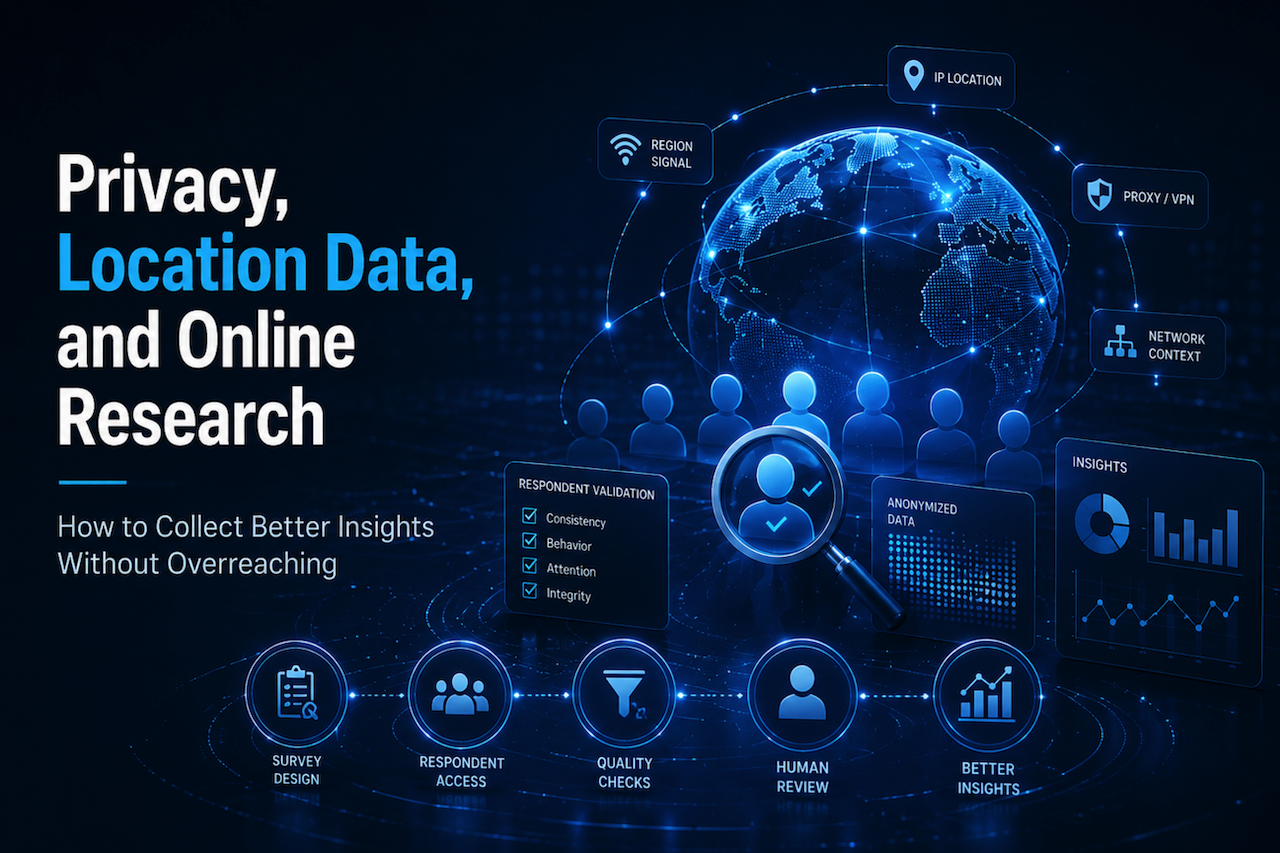
Online research depends on a quiet exchange of trust. People answer surveys, visit websites, compare products, test concepts, and share opinions because they believe their information will be used responsibly. Businesses, in return, rely on that data to decide which markets to enter, which audiences to prioritize, and which ideas deserve investment.
Location data often sits at the center of that exchange. It can help confirm whether respondents are in the right country, whether traffic patterns make sense, and whether a research sample reflects the audience a company intended to reach. But location data can also create privacy risk when it is too precise, stored for too long, or combined with other identifiers in ways people would not reasonably expect.
The challenge is how to use location signals proportionately.
Why Location Signals Matter in Online Research
For online research teams, location is often a quality signal rather than a marketing signal. A company testing a new product in a specific market needs respondents from that market. A brand researching buyer behavior in a particular country or region needs confidence that people outside the target audience are not distorting its sample. A B2B study targeting decision-makers in a defined market may need to identify inconsistent responses, duplicate participation, or suspicious traffic patterns.
In those situations, IP-based location can help. It can provide context about a user’s approximate country, region, internet service provider, or possible use of privacy tools. That does not mean an IP address should be treated as a full identity marker. It means it can be a useful signal among several.
This is especially important in large-scale online research, where poor respondent quality can quietly damage the final results. Research platforms and industry resources, including materials published by Clariti, note that even a small percentage of misrepresented respondents may be enough to distort market sizing, product feedback, pricing research, or customer segmentation.
IP Location Is Useful, but It Has Limits
IP geolocation works best when teams understand what it can and cannot prove. While IP geolocation accuracy is generally higher at the country level than at the city level, it can still provide useful context for online research. For research purposes, confirming that a respondent appears to be in the intended country may be valuable. Assuming their exact city, neighborhood, or real-world movement from an IP address alone is far less reliable.
There are several reasons for this. Mobile networks can route traffic through different locations. Internet providers may assign addresses in ways that do not map neatly to a user’s physical location. VPNs, proxies, public Wi-Fi, and corporate networks can all affect the signal. Some users also intentionally hide their IP addresses to protect privacy or access services while traveling.
That does not make IP location unreliable; it means research teams should treat it as context, not certainty. A respondent claiming to be in one country while their IP points to another may warrant closer review. A sudden pattern of many responses from the same network may deserve attention. A VPN or proxy signal may matter in some studies and be irrelevant in others. The right response is not automatic rejection; it is better validation.
Where Better Insight Becomes Overreach
Location data becomes more sensitive as it becomes more precise, persistent, and personal. There is a big difference between using country-level location to validate a research sample and building detailed profiles around a person’s movements. The first can support data quality. The second can easily cross into surveillance.
Regulators have been paying attention to this distinction. In December 2024, the U.S. Federal Trade Commission announced action against Mobilewalla over the collection and sale of sensitive location data, including data that could be linked to visits to places such as healthcare facilities, religious organizations, and military installations. The case is a useful reminder that location data can reveal far more than geography when it is precise, retained, and combined with other information, as outlined in the FTC's Mobilewalla announcement.
For online research, the lesson is clear: collecting more data is not always better. The strongest research programs usually collect the minimum data needed to answer the research question, then apply clear controls around access, retention, and reporting.
How to Use Location Data Responsibly in Research
Responsible online research starts with purpose. Before collecting or analyzing location signals, teams should be able to answer a simple question: What decision will this help us make?
If the purpose is to confirm that respondents are in the right country, country-level validation may be enough. If the goal is to compare regional demand, aggregated regional data may be appropriate. If the study does not require a precise location, there is rarely a good reason to collect or retain it.
A privacy-aware research workflow should also separate individual signals from final reporting. Raw technical signals may help identify suspicious activity during quality control, but the client does not always need to see those details. In many cases, aggregated findings are more useful and less risky than respondent-level data.
A practical approach includes:
- Use a coarse location where possible instead of a precise location.
- Combining IP context with survey behavior, timing, consistency, and answer quality.
- Avoiding automatic decisions based on IP location alone.
- Limiting retention of raw technical data.
- Reporting insights in aggregated or anonymized formats whenever possible.
This balance is where experienced research operations matter. Automated systems can flag unusual patterns, but they cannot always understand context. A respondent using a VPN may be trying to commit fraud, but they may also be working remotely, traveling, or protecting their privacy on public Wi-Fi.
Why Human Review Still Matters in Responsible Research
Good research quality control is rarely based on one signal. A suspicious IP pattern may be reviewed alongside completion speed, open-text responses, contradictory answers, duplicate entries, and market-specific recruitment criteria. That layered approach is more reliable than treating any single indicator as definitive.
This matters because online studies can now reach thousands of respondents across multiple countries in a short period of time. Speed is valuable, but only if the data remains trustworthy. If quality checks are too weak, bad responses enter the dataset. If they are too aggressive, valid respondents may be excluded for the wrong reasons.
Human review helps close that gap. IP location, proxy signals, and regional context can help researchers validate samples and identify unusual patterns. Still, they should support the research question rather than serve as a means of building unnecessary personal profiles. In practice, better online research means collecting the right data, combining it with other quality checks, and keeping privacy expectations at the center of the process.
Conclusion
Location data can be a valuable tool for improving online research quality, but it is most effective when used responsibly and in context. IP-based location signals can help validate samples, identify unusual patterns, and support better decision-making, but they should not be treated as definitive proof of identity or behavior.
The strongest research programs balance data quality with privacy by collecting only the information needed, applying appropriate safeguards, and combining location signals with broader quality-control measures. By taking a measured approach, organizations can generate more reliable insights while maintaining the trust that effective online research depends on.
Disclaimer
This article is provided for informational and educational purposes only and should not be considered legal, privacy, regulatory, or professional advice. Any references to third-party products, services, organizations, studies, or websites are included solely for informational purposes and do not constitute an endorsement or recommendation by IPLocation.net. Readers should conduct their own research and seek appropriate professional guidance before making decisions related to data collection, privacy practices, compliance requirements, or online research methodologies. IPLocation.net is not responsible for the content, accuracy, availability, policies, or practices of any third-party websites linked from this article. Accessing and using external websites is done at the reader's own risk.
Related Articles

April 7, 2026
5 Ways Your Business Can Strengthen Online Privacy Without Slowing Growth: Smart, Scalable Security Strategies
In today’s digital landscape, businesses can no longer afford to ignore online privacy as they pursue growth in a global marketplace. The good news is that it’s possible to strengt...
Read More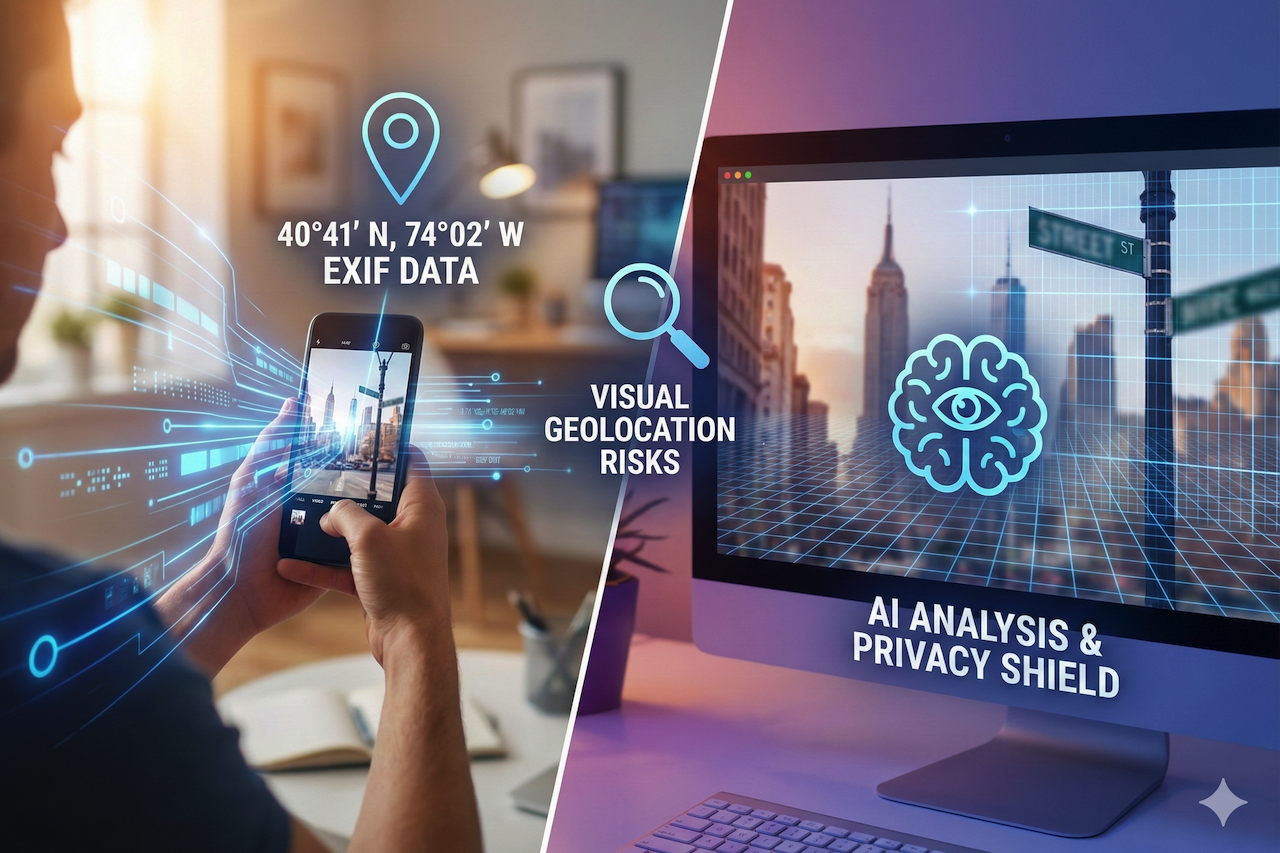
January 16, 2026
Beyond the IP Address: The Hidden Geolocation Risks in Your Visual Content
While network administrators and privacy-conscious users diligently mask their IP addresses using VPNs and proxies, a significant vulnerability often goes unnoticed: the digita...
Read More
September 17, 2025
Using Augmented Reality (AR) Glasses Safely
AR glasses are becoming common in sectors such as medicine and consumer goods. Their location, the use of their IP addresses, and data permission are vital safety and privacy consi...
Read More
Comments
Comments are moderated to keep the discussion useful and respectful. Spam, automated submissions, and low-value promotional comments are removed. Comments with outbound links may be approved when the link is relevant to the article and genuinely helpful to readers.
No comments have been published yet.