

Cybersecurity, Artificial Intelligence
The Future of Cybersecurity: Using AI Agents for Real-Time Network Monitoring
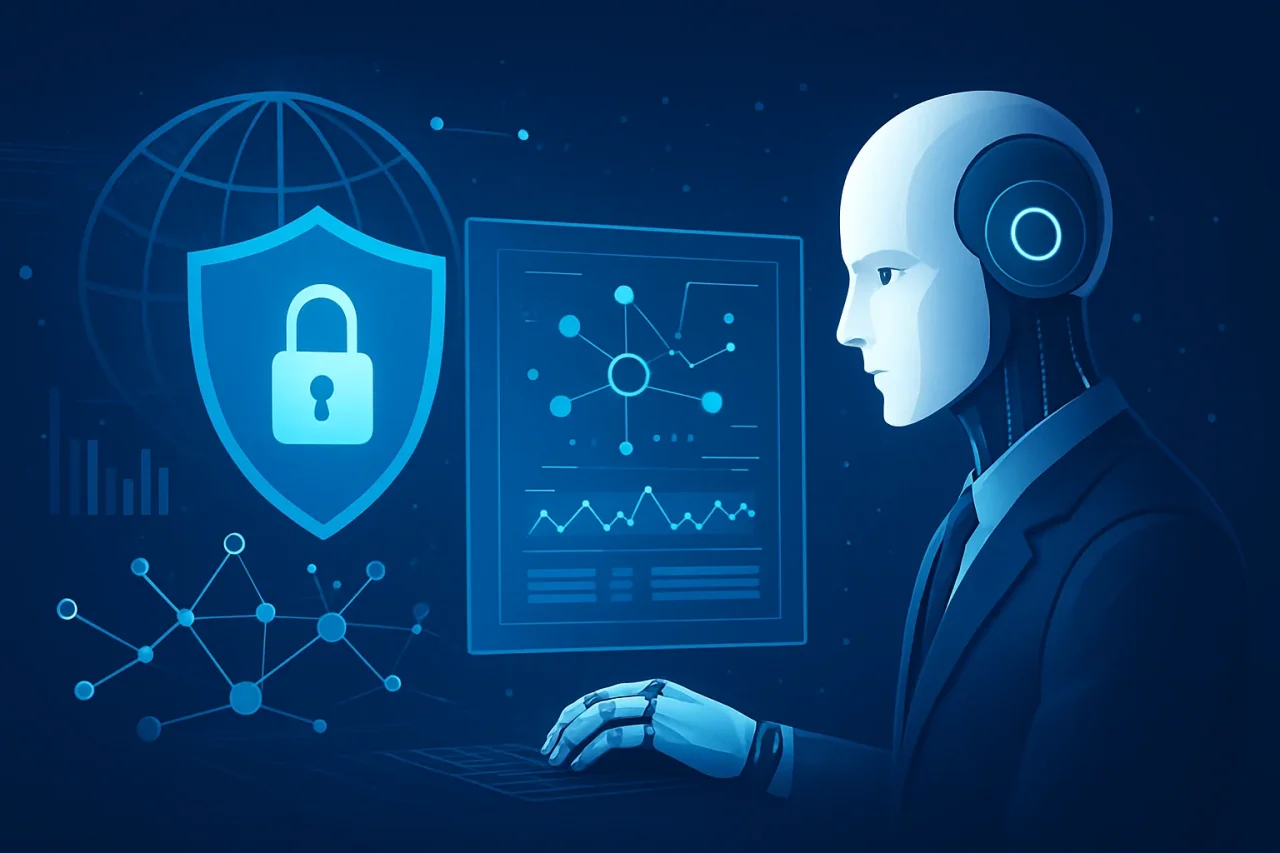
Cybersecurity threats are becoming more sophisticated every year. Organizations now face a constant stream of phishing attempts, malware attacks, unauthorized access attempts, and data breaches. Traditional security tools are still important, but they often struggle to keep up with the speed and complexity of modern cyber threats. This is why many businesses are turning to intelligent automation and AI Agents to strengthen their security posture and improve real-time network monitoring.
As networks grow larger and cybercriminals become more advanced, security teams need tools that can identify threats, analyze patterns, and respond to incidents faster than ever before. Real-time network monitoring powered by artificial intelligence is emerging as a critical component of modern cybersecurity strategies.
Why Traditional Network Monitoring Is No Longer Enough
For years, organizations relied on firewalls, antivirus software, and manual monitoring processes to secure their networks. While these solutions remain valuable, they often generate large volumes of alerts that can overwhelm security teams.
Security analysts may spend hours reviewing logs, investigating suspicious activity, and determining whether an alert represents a genuine threat. During this time, attackers can move through a network, steal sensitive data, or deploy malicious software.
The challenge is not a lack of security data. Instead, organizations are struggling to process and interpret massive amounts of information quickly enough to stop attacks before damage occurs.
This is where AI-powered monitoring systems provide a significant advantage.
How AI Enhances Real-Time Network Monitoring
Artificial intelligence can process enormous amounts of network data in seconds. Unlike traditional monitoring systems that rely heavily on predefined rules, AI-driven solutions can identify unusual behavior patterns and detect anomalies that may indicate malicious activity.
For example, an AI-powered monitoring platform can recognize when a user account suddenly logs in from multiple locations, accesses sensitive resources outside normal working hours, or transfers unusually large amounts of data.
These systems continuously learn from network activity and improve their ability to identify suspicious behavior over time. This enables organizations to detect threats earlier and respond more effectively.
Detecting Threats Before They Escalate
One of the greatest advantages of AI-driven network monitoring is its ability to identify threats during the early stages of an attack.
Many cyberattacks follow predictable patterns. Attackers often begin by scanning networks, probing vulnerabilities, or attempting unauthorized access before launching larger attacks.
Artificial intelligence can identify these warning signs and alert security teams before an attacker gains deeper access to the network.
Early detection helps organizations:
- Reduce the risk of data breaches
- Minimize operational disruptions
- Protect customer information
- Lower incident response costs
- Strengthen overall cybersecurity resilience
By identifying suspicious behavior sooner, businesses can prevent small security incidents from becoming major crises.
Improving IP Intelligence and Traffic Analysis
IP intelligence plays a crucial role in modern cybersecurity. Every device connected to a network generates IP-based activity that can provide valuable insights into user behavior and potential threats.
AI-powered monitoring systems can analyze IP addresses, geographic locations, connection patterns, and historical activity to identify suspicious traffic.
For example, a company may notice login attempts originating from regions where it does not conduct business. AI can flag these activities as potentially malicious and prioritize them for investigation.
Similarly, unusual traffic from anonymous proxies, VPNs, or compromised devices can be detected automatically, allowing security teams to respond quickly.
This combination of IP intelligence and AI analysis significantly improves visibility across the network.
Reducing Alert Fatigue for Security Teams
One of the biggest challenges facing cybersecurity professionals is alert fatigue.
Security tools often generate thousands of notifications every day. Many of these alerts turn out to be false positives, consuming valuable time and resources.
Artificial intelligence helps address this issue by prioritizing alerts based on risk levels and contextual information.
Instead of forcing analysts to review every notification manually, AI can:
- Filter low-priority events
- Correlate related alerts
- Highlight critical threats
- Recommend response actions
- Automate repetitive investigations
This allows security teams to focus their attention on the most serious risks while improving overall efficiency.
Supporting Faster Incident Response
When a security incident occurs, response time is critical.
The longer a threat remains active within a network, the greater the potential damage. AI-powered monitoring tools help accelerate incident response by automatically gathering relevant information and presenting actionable insights.
Security teams can quickly understand:
- Where the attack originated
- Which systems are affected
- How the threat is spreading
- What actions should be taken
Some advanced platforms can even initiate automated responses, such as isolating compromised devices, blocking malicious IP addresses, or restricting suspicious user accounts.
These capabilities help organizations contain threats before they cause widespread disruption.
Strengthening Zero-Trust Security Models
Many organizations are adopting zero-trust security frameworks to improve protection against modern threats.
The core principle of zero trust is simple: never automatically trust users or devices, regardless of whether they are inside or outside the network.
AI enhances zero-trust strategies by continuously evaluating user behavior, device activity, and network interactions. Instead of relying solely on credentials, organizations can make security decisions based on real-time risk assessments.
This dynamic approach provides stronger protection against insider threats, compromised accounts, and unauthorized access attempts.
The Future of AI-Powered Cybersecurity
As cyber threats continue to evolve, artificial intelligence will play an increasingly important role in network security. Future monitoring systems will become more autonomous, more accurate, and more capable of handling complex security challenges.
Organizations that invest in AI-driven network monitoring today will be better positioned to defend against emerging threats tomorrow.
While artificial intelligence is not a replacement for skilled cybersecurity professionals, it serves as a powerful force multiplier. By combining human expertise with intelligent automation, businesses can improve visibility, strengthen defenses, and respond to threats with greater speed and precision.
Conclusion
Real-time network monitoring is no longer optional in today's cybersecurity landscape. Organizations need faster, smarter, and more efficient ways to identify and respond to threats.
Artificial intelligence provides the capabilities necessary to analyze vast amounts of network data, detect anomalies, reduce alert fatigue, and accelerate incident response. As businesses continue to face increasingly sophisticated cyberattacks, AI-powered monitoring solutions will become a cornerstone of modern cybersecurity strategies.
Companies that embrace these technologies can improve security outcomes, reduce risks, and build more resilient digital environments for the future.
Related Articles

October 21, 2025
Enhancing IT Security Operations with AI Digital Twins
Cyberattacks are becoming more intelligent and quicker each day. IT teams struggle to keep pace, often feeling like they’re patching holes in a sinking ship. If you’ve ever bee...
Read More
June 16, 2025
How AI-Powered Language Processing is Transforming Cybersecurity Communication
Cybersecurity teams are drowning in noise. In fact, 67 % of IT groups admit they regularly ignore lower‑priority alerts, and 16 % of SOC analysts manage to address only half of the...
Read More
May 1, 2024
A New Era of Cybersecurity is Being Defined by AI and 5G: The Industry Must Adapt Together
Until the past few years, cybersecurity used to be very resource-intensive, but now the roll out of 5G and AI is revolutionizing cybersecurity completely. Several activities like m...
Read More
Comments
Comments are moderated to keep the discussion useful and respectful. Spam, automated submissions, and low-value promotional comments are removed. Comments with outbound links may be approved when the link is relevant to the article and genuinely helpful to readers.
No comments have been published yet.